You filed a claim with Lemonade pet insurance, got approved, and then the payment landed lower than the vet bill you just paid. That difference alone doesn’t mean anything went wrong with your claim. The final number usually comes down to which expenses count as eligible, your deductible, your reimbursement percentage, and your policy’s specific terms.
This guide walks through where that difference typically comes from and when it deserves a second look.
How Lemonade pet insurance reimbursement works
Lemonade pet insurance reimbursement follows a set sequence, and understanding it explains most of the confusion around a lower-than-expected payment. Your vet bill is the starting point, but it isn’t the number your reimbursement gets calculated from.
First, Lemonade reviews which charges count as eligible expenses under your policy. From there, it subtracts your deductible from that eligible amount, not the total bill. What’s left gets multiplied by your reimbursement rate, whether that’s 70%, 80%, or 90%, to produce your final payment.
Reading how Lemonade evaluates pet insurance claims makes this sequence easier to follow, since pet insurance reimbursement rarely matches what you paid at the clinic. Each step in that chain, not the treatment itself, is usually where the final number changes.
Why your Lemonade reimbursement may be lower than the vet bill
A lower Lemonade reimbursement almost always traces back to one of a handful of factors, and none of them mean your claim was mishandled.
Some charges on your vet bill simply don’t qualify as eligible expenses, things like exam fees, certain diagnostics, or add-on services your specific policy excludes. Your deductible then reduces whatever remains before the reimbursement percentage gets applied, so a plan with a higher deductible or a lower reimbursement rate produces a smaller check even for the exact same treatment.
Coverage limits and conditions also matter, since a policy might cap payment for a specific condition or apply a waiting period that excludes a recently developed issue. Pet insurance companies in Florida vary widely in how they define these terms, which is part of why two pet owners with similar bills can receive different reimbursements.
Taken together, these factors usually shape the final reimbursement amount.
How coverage and waiting periods can affect reimbursement
Lemonade pet insurance coverage determines which parts of your treatment even reach the reimbursement calculation in the first place. If a specific service isn’t covered under your plan, it never enters the eligible expenses total, no matter how medically necessary it was.
A lemonade pet insurance waiting period works the same way: care connected to a condition that started, or showed symptoms, before that window closed typically gets excluded from the claim, even when the treatment itself happens well after the waiting period ends.
This is worth understanding on its own, since policy language and Florida insurance law both shape how these exclusions are applied. Knowing which exclusions come from coverage terms helps you tell the difference between a bill that was never eligible and one that may deserve a closer look.
When a lower reimbursement deserves a closer review
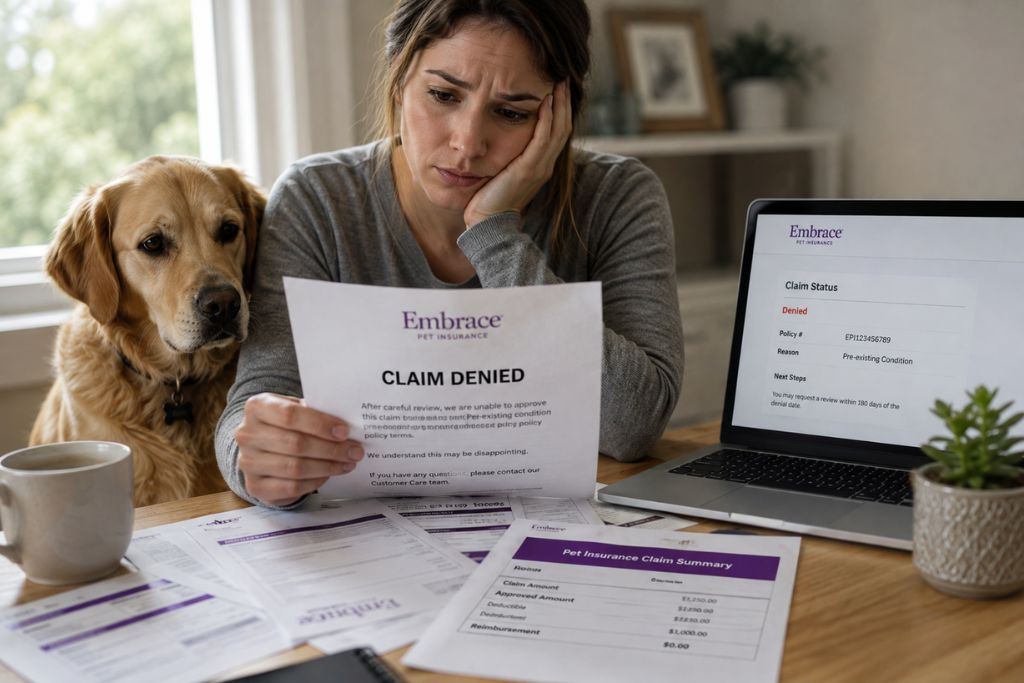
A lower reimbursement does not automatically signal a problem with how Lemonade handled your claim. Most of the time, it simply reflects the deductible, rate, and coverage terms already built into your policy.
A closer review becomes worthwhile in more specific situations, though, such as a calculation that doesn’t seem to match your policy’s stated terms, expenses that appear to be covered yet were excluded anyway, a payment explanation that leaves real questions unanswered, or a clear mismatch between your veterinary records and the coverage decision Lemonade made.
These situations sit at the center of many pet insurance claim disputes we review at Your Pet Attorneys, and an underpaid pet insurance claim often involves one of these patterns once someone reviews the documentation line by line.
What should you check if your Lemonade claim seems underpaid?
If your Lemonade claim still feels lower than it should, a quick review usually clarifies where the number came from.
- Compare your vet bill line by line against the reimbursement explanation you received.
- Identify which expenses Lemonade counted as eligible versus excluded.
- Check your deductible and reimbursement percentage against what was actually applied.
- Review the coverage terms tied to the specific condition or treatment.
- Ask Lemonade for a more detailed explanation if the calculation still doesn’t add up.
If differences remain after that, it may be time to request a free consultation so someone can review the full picture with you.
Key takeaways about Lemonade pet insurance reimbursement
- Your veterinary bill and the amount eligible for reimbursement may not match.
- Your deductible and reimbursement percentage both reduce the final payment you receive.
- Your policy’s coverage terms determine which veterinary expenses qualify.
- A lower reimbursement does not necessarily mean your claim was denied.
- An unexplained difference between your policy, your veterinary records, and your payment may deserve a closer review.
Why Your Vet Bill and Insurance Reimbursement May Be Different
| Factor | How It May Affect Your Reimbursement |
|---|---|
| Eligible expenses | Some charges on the veterinary bill may not qualify for reimbursement under the policy. |
| Deductible | The applicable deductible may reduce the amount used to calculate payment. |
| Reimbursement rate | The policy reimburses the applicable percentage of eligible expenses. |
| Coverage terms | Certain treatments, services, or fees may be limited or excluded. |
| Waiting period | Expenses connected to conditions arising during an applicable waiting period may not qualify for coverage. |
From Vet Bill to Reimbursement: Where the Difference Comes From
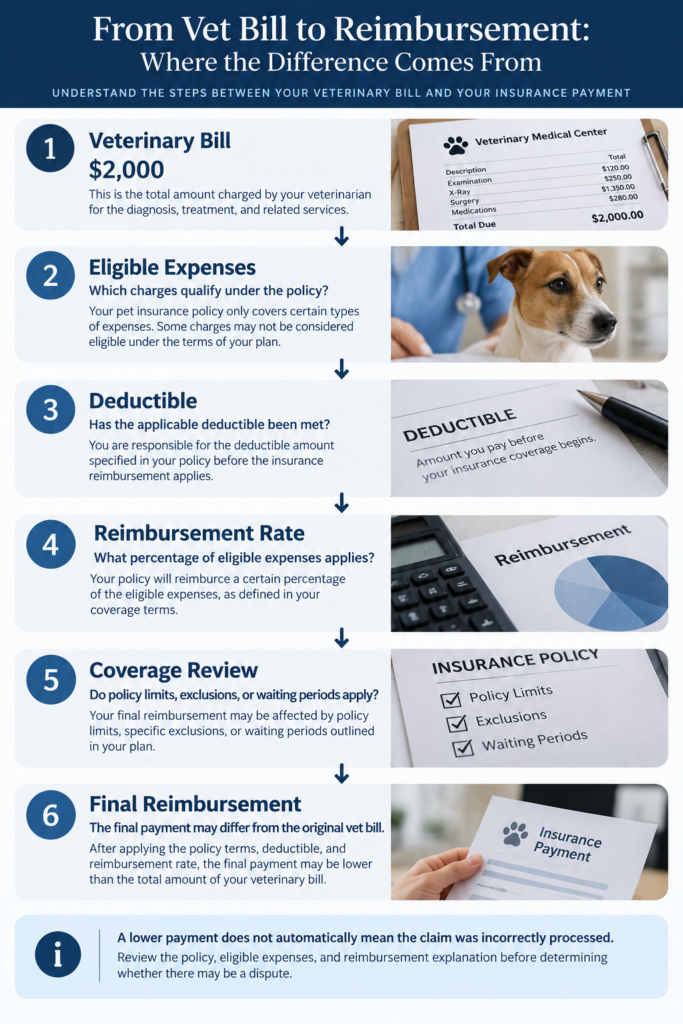
A lower payment doesn’t automatically mean the claim was processed incorrectly. Review the policy, eligible expenses, and reimbursement explanation before deciding whether to dispute it.
How Your Pet Attorneys can help with an underpaid claim
Reviewing an underpaid claim means comparing your policy, your veterinary records, the payment explanation, and Lemonade’s coverage decision side by side. Our team reviews that exact combination when a pet owner suspects the math behind their reimbursement doesn’t add up.
Was Your Lemonade Claim Paid Less Than Expected?
Your Pet Attorneys can review your policy, veterinary records, and reimbursement decision to help determine whether your payment deserves a closer legal review.
Request Your Free Claim Review