Finding a hospital is only the first step when your pet needs emergency care. Emergency veterinary hospitals in Miami can offer very different levels of care, and the type of emergency your pet is facing often determines whether it needs quick evaluation, advanced diagnostics, surgery, hospitalization, or a specialist. Understanding these differences helps you know what to expect during the emergency and later, with costs and any insurance claim that follows.
What type of emergency veterinary care does your pet need?
The right level of care depends on what’s happening with your pet, not what you can tell from the outside. Emergency veterinary care in Miami hospitals covers a wide range, from quick stabilization for a mild issue to a much longer stay for something serious.
Some situations only need an initial exam to rule out anything dangerous; others require diagnostic testing before anyone can decide on treatment. A pet in worse shape might need surgery, hospitalization, and monitoring, or care from a specialist who handles a specific type of injury.
Emergency veterinary hospitals in Miami are set up to make that call quickly once your pet is examined, which is why emergency pet care starts with getting there rather than guessing the diagnosis.
Types of Emergency Veterinary Care and When They May Be Needed
| Type of Care | What It May Include | Why It Matters |
|---|---|---|
| Emergency evaluation | Initial examination and stabilization | Helps determine the urgency and next steps |
| Diagnostic care | Lab work, X-rays, or ultrasound | Helps identify the cause of the emergency |
| Emergency surgery | Surgical intervention when necessary | May be required for serious injuries or conditions |
| Hospitalization | Monitoring, medication, and supportive care | Provides ongoing care for unstable pets |
| Specialty care | Advanced evaluation by veterinary specialists | May be needed for complex conditions |
Emergency vet vs. 24-hour veterinary hospital
Emergency vet Miami searches often turn up two different kinds of listings, and the label alone doesn’t tell you everything you need to know. A practice can call itself an emergency vet for handling urgent situations during regular hours, while a 24-hour emergency vet Miami facility is simply open around the clock, though not every emergency veterinary hospital in Miami makes that clear.
Being open at 3 a.m. doesn’t mean a place has surgical capacity, in-house diagnostics, or a specialist on call. Those capabilities vary between centers, even among facilities that all advertise emergency or 24-hour service.
What matters most is knowing what a specific location can handle before you need it, the same way you’d check availability anywhere else in Florida. A quick call ahead usually clears this up faster than the website does.
When emergency care requires surgery or a veterinary specialist
Initial evaluation and stabilization handle most emergencies at emergency veterinary hospitals in Miami, but not all of them. A trauma case, like a car accident or a fall, can look stable at first and reveal internal injuries once examined more closely.
Some orthopedic emergencies, including certain fractures or ligament injuries, may require surgical evaluation. Neurological emergencies may also require evaluation by a veterinary specialist, depending on the pet’s condition and the resources available at the hospital. Not every hospital keeps that kind of specialist on staff, so some pets are transferred to a facility with veterinary specialists equipped for that specific type of case.
Some complications only appear once treatment is underway, and that’s when hospitalization with intensive monitoring becomes part of the plan. None of this is predictable from home, which is part of why emergency visits sometimes cost more than expected.
Why diagnostics matter during a veterinary emergency
Figuring out what’s wrong is often the hardest part of an emergency. Lab work can flag organ stress or internal bleeding within minutes, while X-rays and ultrasound show what’s happening inside without exploratory surgery.
Which tests get ordered depends on the symptoms in front of the vet, not a fixed checklist. A pet that swallowed something might need imaging right away, while one with signs of poisoning might need bloodwork first.
More advanced testing is sometimes added once initial results raise a new question, and in those cases some pets are referred to advanced veterinary diagnostic centers equipped for more complex imaging or lab work, as a normal part of the process.
Emergency treatment costs and pet insurance coverage
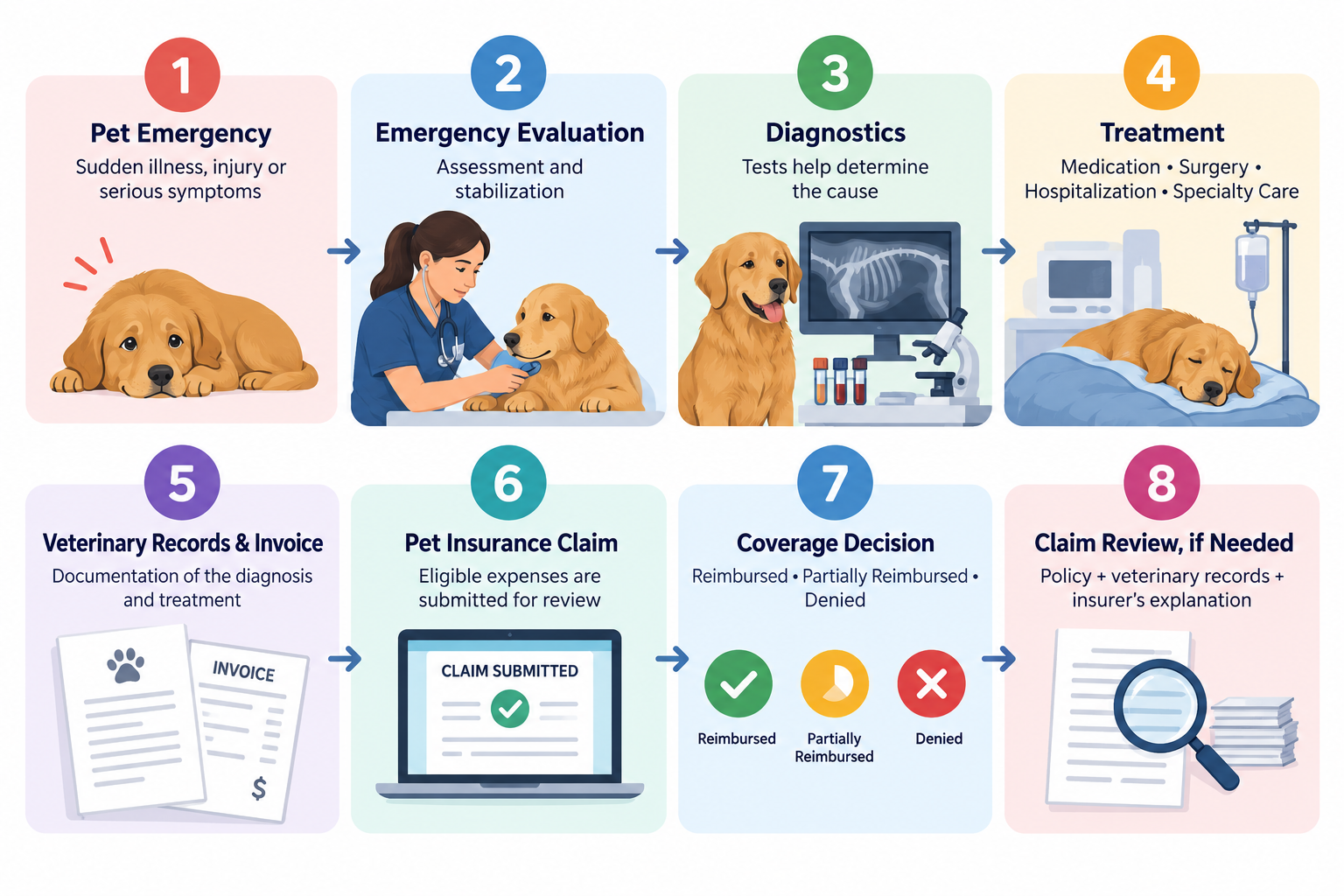
An emergency bill rarely comes from one line item; it usually bundles evaluation, diagnostics, medication, and any procedures or surgery into one billed event.
Whether pet insurance emergency coverage applies to each of those pieces, and how much comes back to you, depends on your specific policy rather than the emergency itself. Eligible expenses, your deductible, your reimbursement percentage, and any coverage limits or exclusions all factor into the final amount.
None of this means a specific treatment is or isn’t covered before you file, and it’s worth understanding the broader rules, including how Florida insurance law treats claim handling and disclosure, before assuming a lower payment reflects an error.
When an emergency vet bill becomes an insurance issue
Questions often come up once the emergency is over and the paperwork catches up. Most emergency veterinary hospitals in Miami document treatment clearly, but a claim can still come back different than expected. A treatment might be denied, underpaid, marked as ineligible, or tied by the insurer to an exclusion or a pre-existing condition.
A difference between what you expected and what you received doesn’t automatically mean there’s a legal dispute waiting to happen. Most of the time, it means someone needs to sit down with the policy, the veterinary records, and the payment explanation together, which is exactly the kind of legal support for pet insurance claims our office provides.
Key takeaways about emergency veterinary care in Miami
- Emergency veterinary hospitals in Miami may offer very different levels of care and capabilities.
- Some emergencies require diagnostics, surgery, hospitalization, or specialist care.
- A 24-hour facility is not necessarily the same as a specialty hospital.
- Your pet insurance coverage depends on your policy and the treatment your pet received.
- Your veterinary records and invoices can become important if an emergency claim is questioned.
From Pet Emergency to Insurance Claim: What Happens Next?
Need help with an emergency pet insurance claim?
If the treatment already happened and the claim came back denied or underpaid, Your Pet Attorneys can step in. We review the policy, veterinary documentation, and the insurer’s decision to see whether the payment matches what your pet’s records support.
Need Help With an Emergency Pet Insurance Claim?
Your Pet Attorneys can review your policy, veterinary records, and claim decision to help determine whether your case deserves a closer look.
Request a Free Claim Review