Most pet owners purchase coverage with the expectation that emergencies will be covered.
The reality is more complex. Although many emergency treatments are eligible for reimbursement, the final payout usually depends on how your insurer interprets your policy, applies reimbursement percentages, and reviews your veterinary records.
Disputes can arise when insurers question medical necessity, classify a condition as pre-existing, or interpret policy language in ways that reduce or deny payment. Understanding these factors in advance can make a significant difference when it’s time to file a claim.
Today, we’ll review what every pet owner should understand about emergency coverage.
What does emergency pet coverage usually include?
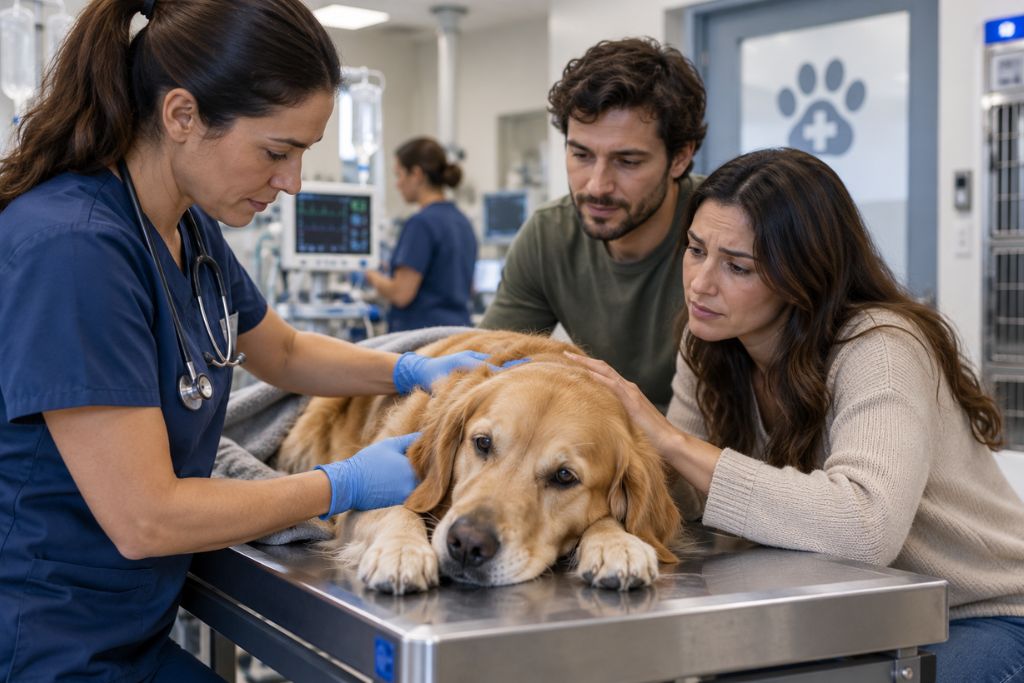
If your pet is rushed to an emergency animal hospital, a standard policy is typically built to cover:
- Emergency vet visits and triage fees
- Emergency animal hospital care and overnight stays
- Hospitalization and intensive care
- Diagnostic imaging, including X-rays, MRI, and CT scans
- Blood tests and laboratory work
- Emergency surgery
- Specialist consultations
- Prescription medications tied to a covered condition
Most pet insurance emergency coverage plans include these services when they result from a covered accident or illness.
What your policy may cover vs. what insurers sometimes challenge
Seeing this visually helps you read your policy more critically before you need it:
| Emergency Service | Typical Policy Coverage | Common Claim Challenge |
|---|---|---|
| Emergency Surgery | Usually Covered | Surgeon or anesthesia fees reduced |
| ICU Hospitalization | Usually Covered | Overnight monitoring denied |
| MRI / CT Scan | Usually Covered | Linked to a pre-existing condition |
| Prescription Medications | Often Covered | Certain medications excluded |
| Specialist Consultation | Usually Covered | Referral considered unnecessary |
What emergency treatments are commonly covered?
Emergency surgery
Emergency surgery pet insurance typically covers medically necessary procedures under accident and illness policies, provided they aren’t related to a pre-existing condition. Reimbursement for anesthesia and specialist surgeons is often the source of disputes, even when the surgery itself is approved without issue.
Accident injuries
Injuries from accidents, like fractures, cuts, or falls, are some of the simplest claim categories. They’re clearly unexpected, don’t usually involve pre-existing conditions, and the documentation is generally straightforward to connect to a single incident.
Serious illnesses
Sudden illnesses that need emergency care, like acute kidney failure or serious infections, are usually covered if the condition wasn’t known before. The tricky part often comes when the insurer says that earlier veterinary notes show the condition was there before the insurance started.
Poisoning and toxic exposure
Toxic ingestion and poisoning are usually considered accidental events by most pet insurance plans. Getting the right treatment can be costly and needs to be done quickly, but thankfully, claims for these emergencies are often handled more smoothly than those for illness-related issues.
Foreign object removal
It’s clear that it was an accident, and having documentation of what was ingested, along with a vet’s advice for removal, is typically enough to handle the claim easily.
Respiratory emergencies
Breathing crises, whether caused by allergic reactions, infections, or previously undiagnosed conditions, are typically covered if they qualify as an emergency under the policy.
How emergency pet insurance claims are usually processed
Treatment is completed, your vet provides the medical records and invoice, and you submit the claim with any required forms. The insurer then reviews that documentation against your policy terms before deciding whether to reimburse.
Most claim disputes begin during this review stage, when insurers compare your veterinary records with their interpretation of the policy. Questions about medical necessity, eligible expenses, or policy language can all influence the final reimbursement decision.
How you handle pet insurance claimsfrom that point, whether accepting the decision or pushing back, can determine what you actually receive.
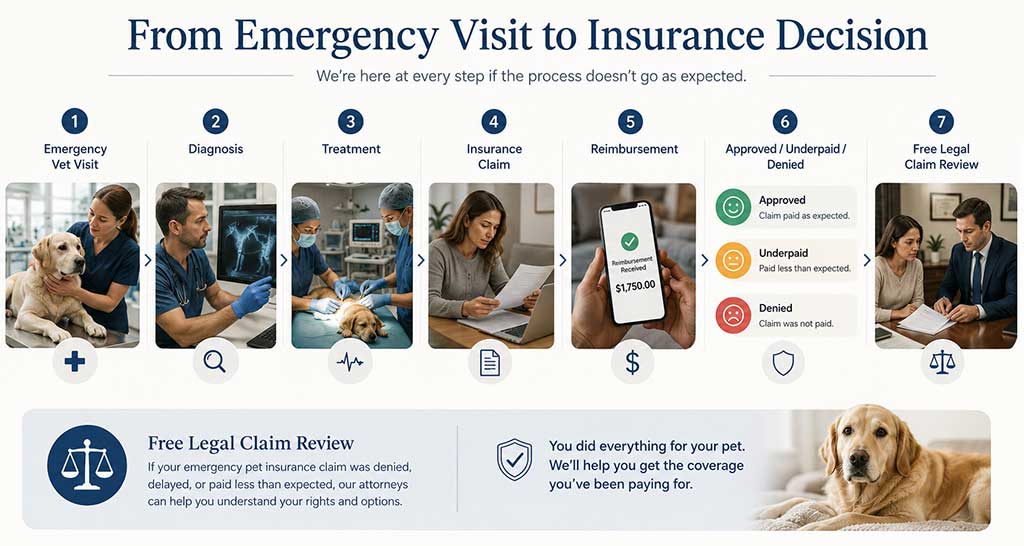
How emergency vet reimbursement typically works
Most pet insurance plans reimburse a percentage of eligible expenses after the deductible. For example, with 80% coverage, a $250 deductible, and a $3,000 vet bill, you’d get 80% of $2,750, totaling $2,200.
Emergency surgery and hospitalization reimbursements work similarly but may be lower if fees are categorized differently or if coverage limits are reached. Some plans cap reimbursements per incident or year, so reviewing these caps is as important as understanding the reimbursement percentage.
What emergency expenses may not be covered or fully reimbursed?
Not all emergency expenses are reimbursable.
Waiting periods often result in claim denials if an emergency occurs before they end, even if treatment is covered. Pre-existing conditions, documented prior, can also lead to denial or reduction, even if unrelated. Preventive or routine items usually aren’t covered during emergencies. Incomplete documentation, such as missing records or discrepancies, can delay or reduce reimbursements.
Why your emergency reimbursement may be lower than expected
Your deductible reduces the base amount before the reimbursement percentage is applied.
Your plan’s annual maximum caps the total; certain services may be excluded even if the rest of the treatment is covered. Beyond those factors, the insurer may classify specific line items differently than your vet described them, which directly affects what counts as an eligible expense in the final calculation.
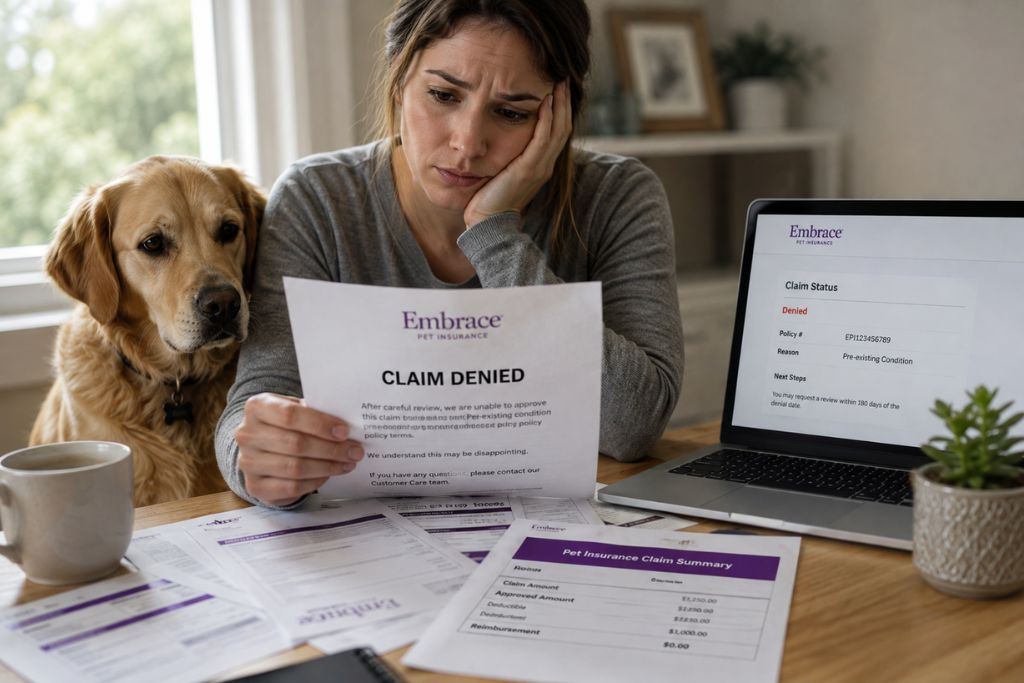
Why emergency pet insurance claims get denied
Many of Florida’s pet insurance companies cite similar reasons when denying or reducing emergency claims. Recognizing these common scenarios can help you understand the insurer’s decision.
- Pre-existing condition: The emergency is linked to a condition documented before coverage began.
- Treatment wasn’t considered medically necessary: The insurer questions whether the treatment was required.
- Emergency occurred during the waiting period: Coverage wasn’t yet in effect.
- Incomplete veterinary records: Missing documentation delays or prevents approval.
- Policy exclusions: Certain services or treatments aren’t covered under the policy.
- Emergency reimbursement was reduced: The insurer pays only part of the invoice based on reimbursement percentages, coverage limits, or policy interpretation.
When does an emergency coverage dispute become a legal issue?
Not every denied claim indicates a legal problem; sometimes insurers are simply following their policy terms, and some denials are quite straightforward.
However, there are cases where taking a closer look can really make a difference, and Florida insurance lawyers experienced in pet coverage disputes can assist you in evaluating these situations.
It’s typically worth seeking a legal review when you get only partial reimbursement for covered services without a clear explanation in the policy, when exclusions are applied in ways that seem to conflict with the policy language, or when your veterinary records strongly support coverage.
What to do if your emergency pet insurance claim is denied
- Make sure to review your entire policy, including the declarations page and any endorsements, not just the general plan description you saw when you enrolled.
- Gather all veterinary records related to the emergency, paying special attention to dates, diagnoses, and any older records the insurer might be referencing in their denial.
- Ask the insurer for a written explanation, including the specific policy language they are using and why they think it applies to your case.
- Formal appeal with additional documentation that directly addresses the reason given for the denial.
- If the appeal isn’t successful, consider reaching out to Your Pet Attorneys to review whether the insurer’s claim is consistent with your policy and Florida’s insurance laws.
How Your Pet Attorneys can help
Your Pet Attorneys reviews all of it: the policy language, the veterinary records, the insurer’s explanation, and whether Florida’s insurance statutes were followed in handling your claim.
Our team is here to help policyholders who feel their emergency vet reimbursements were unfairly reduced, their claims were unfairly denied due to pre-existing conditions, or policy exclusions were applied in confusing ways.
We believe emergency care is crucial and shouldn’t be hindered by denied claims.
If your pet insurance claim was denied, delayed, or you received less than expected, The Gross Group, Your Pet Attorneys, is ready to review your policy, assess your claim, and guide you through your legal options. You did everything your pet needed, and you deserve the coverage you’ve been paying for to do the same.
Think Your Emergency Claim Was Underpaid?
Our attorneys can review your policy, veterinary records, and the insurer’s explanation to help determine whether your emergency claim was handled fairly.