Your pet gets a new diagnosis, you file a claim with Kanguro Pet Insurance, and the response comes back different than expected: the condition was treated as pre-existing based on something in earlier veterinary records.
What if your pet was never diagnosed with that condition before the policy started? A denial like this is worth reviewing on two fronts: what the records actually document, and how the policy defines a pre-existing condition. Let’s dive right in.
How Kanguro pet insurance reviews pre-existing conditions
For a first claim, Kanguro Pet Insurance may request and review medical records covering roughly the 12 months before your coverage started. Those records can then be compared with the condition involved in the current claim to determine whether anything in your pet’s previous medical history may affect coverage.
This matters because veterinary records often contain information that predates any formal diagnosis. A vet’s note about a symptom, a lab result, or a passing comment during an unrelated visit can all surface during that review, even if nobody named it at the time.
Reading how Kanguro pet insurance evaluates claims involving pre-existing conditions helps explain why a denial can bring up pet insurance medical records you may have forgotten were ever documented.
Can a condition be pre-existing if my pet was never diagnosed before?
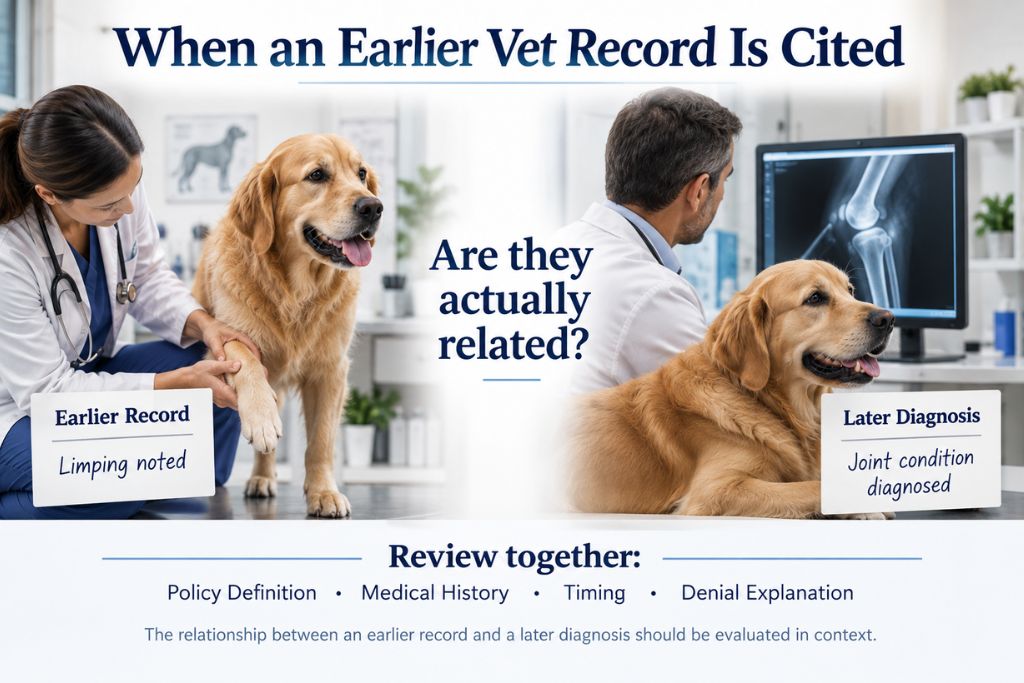
Can a condition be pre-existing if your pet was never formally diagnosed with it before? Potentially, depending on your policy’s exact wording and what the veterinary records actually document.
A previous symptom is not the same as a previous diagnosis, but the absence of a formal diagnosis doesn’t automatically settle the coverage question. Insurers often look at whether earlier signs connect to the same underlying issue, not just whether a vet wrote down a name for it.
Consider a dog that limped occasionally during checkups years ago, with nothing more noted at the time. Months later, it’s diagnosed with a joint condition. The question becomes whether that earlier limp and the diagnosis are related closely enough to count as the same thing, and that’s rarely obvious from records alone.
What previous veterinary records can affect a Kanguro claim?
Several kinds of information in your pet’s history can become relevant once a Kanguro pet insurance claim triggers a records review: a previous symptom your vet noted, even briefly, an earlier treatment, diagnostic testing from an old visit, medication history, past recommendations or follow-up instructions, and any notes that touch on the condition you’re now claiming.
None of this automatically justifies an exclusion.
These are simply the same pieces of information worth reviewing yourself once a decision comes back, since the pet insurance medical records an insurer cites don’t always tell the full story of what actually happened. Comparing your copy against the pet insurance claim review the insurer performed is often where a real discrepancy first becomes visible.
What to Compare After a Pre-Existing Condition Denial
| What to Review | What to Look For |
|---|---|
| Denial explanation | What condition, symptom, or prior record does the insurer cite? |
| Policy definition | How does the policy define a pre-existing condition? |
| Veterinary records | What symptoms, treatment, or diagnoses were actually documented before coverage? |
| Current diagnosis | How does the claimed condition compare with the previous records? |
| Timeline | Did the relevant events occur before coverage, during a waiting period, or after coverage began? |
| Supporting documents | Do additional veterinary records clarify the medical history? |
When a pre-existing condition denial deserves a closer review
A pre-existing condition denial does not automatically mean the claim was handled incorrectly. Insurers review many records, often going back further than the current diagnosis, and reasonable people can read the same note differently.
A closer look becomes worthwhile in specific situations: when the explanation doesn’t clearly identify which prior history supports the decision, when the cited record seems to describe a different problem, when there’s a real difference between how the records read and how the condition got described, or when the decision is hard to reconcile with the policy’s own definition.
If the connection between older records and the current condition remains unclear, reviewing how pet insurance companies in Florida define and apply pre-existing condition provisions can provide useful context before deciding whether to question the denial.
What should you review after Kanguro denies a claim as pre-existing?
A denial like this becomes easier to evaluate once you break it into a short sequence:
- Read the denial explanation closely, and identify exactly which condition or prior record was cited.
- Check how your policy itself defines a pre-existing condition, word for word.
- Review the veterinary records the insurer is referencing, not just the summary you were given.
- Compare that medical history against the condition currently being claimed.
- Keep all supporting documentation together: the invoice, the claim decision, the veterinary records, and any correspondence.
- Request clarification if the relationship between the history and the denial still isn’t clear.
If a real discrepancy remains after that, it may be worth requesting a free consultation to look at everything side by side.
What Florida law says about pre-existing pet insurance conditions
Florida Statute §627.71545, the state’s Pet Insurance Act, addresses pre-existing conditions directly: a condition is generally treated as pre-existing when it relates to veterinary advice, previous treatment, or signs and symptoms documented before your policy’s effective date or during an applicable waiting period, and is directly related to the condition now being claimed.
The most important part of a disputed denial is who has to prove what. When an insurer applies a pre-existing exclusion, Florida insurance law places the burden on the insurer, not you, to show that the exclusion actually applies to the condition being claimed. That doesn’t guarantee your claim gets covered, but it does shape how the denial should be evaluated going forward.
Key takeaways about Kanguro pet insurance pre-existing condition claims
- A condition may raise pre-existing questions even without a previous formal diagnosis.
- Your veterinary records can matter when Kanguro reviews a claim.
- A previous symptom and a later diagnosis are not necessarily the same thing.
- Compare your policy’s definition and medical history with the denial explanation.
- An unclear connection between previous records and the claimed condition may deserve a closer review.
Was your Kanguro claim denied as a pre-existing condition?
Your Pet Attorneys can review the policy, denial explanation, veterinary records, and supporting claim documentation together to better understand how the pre-existing condition determination was made and whether the records support the insurer’s explanation.
Request Your Free Claim Review