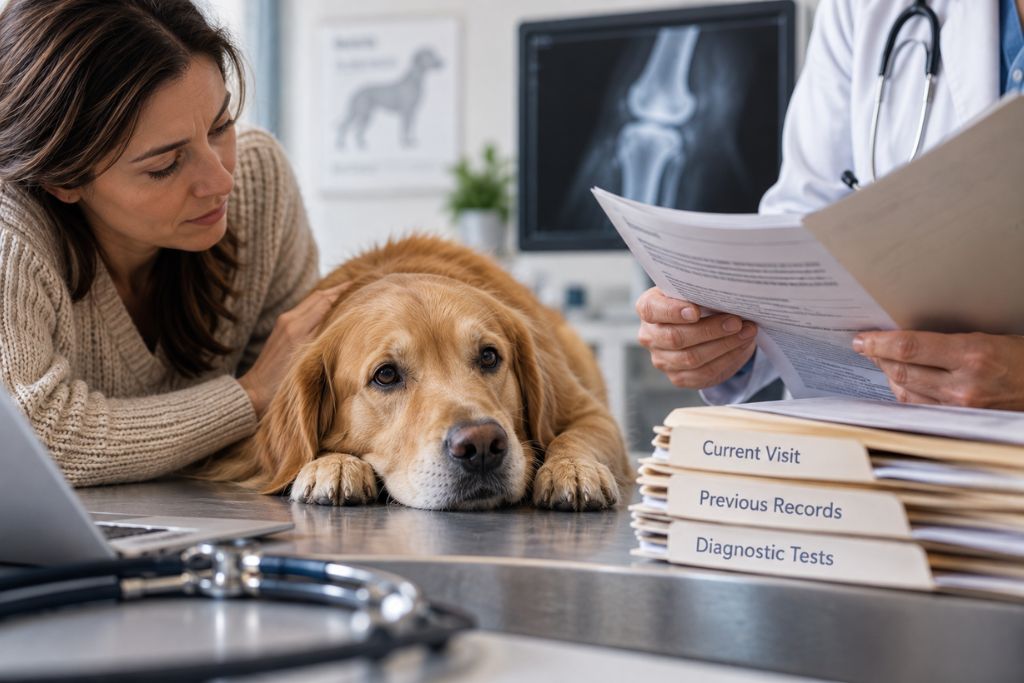
Most pet owners buy a policy with one expectation: a covered illness or injury should lead to a reimbursement check. Yet some Embrace pet insurance claims turn into disputes for reasons that have little to do with the treatment your pet received, but rather with how a claims adjuster reads your pet’s medical history, previous symptoms, and the fine print of your policy.
This article walks through real patterns behind these disputes, so you can recognize the warning signs before a denial catches you off guard. Let’s dive right in.
How Embrace pet insurance claims are typically reviewed
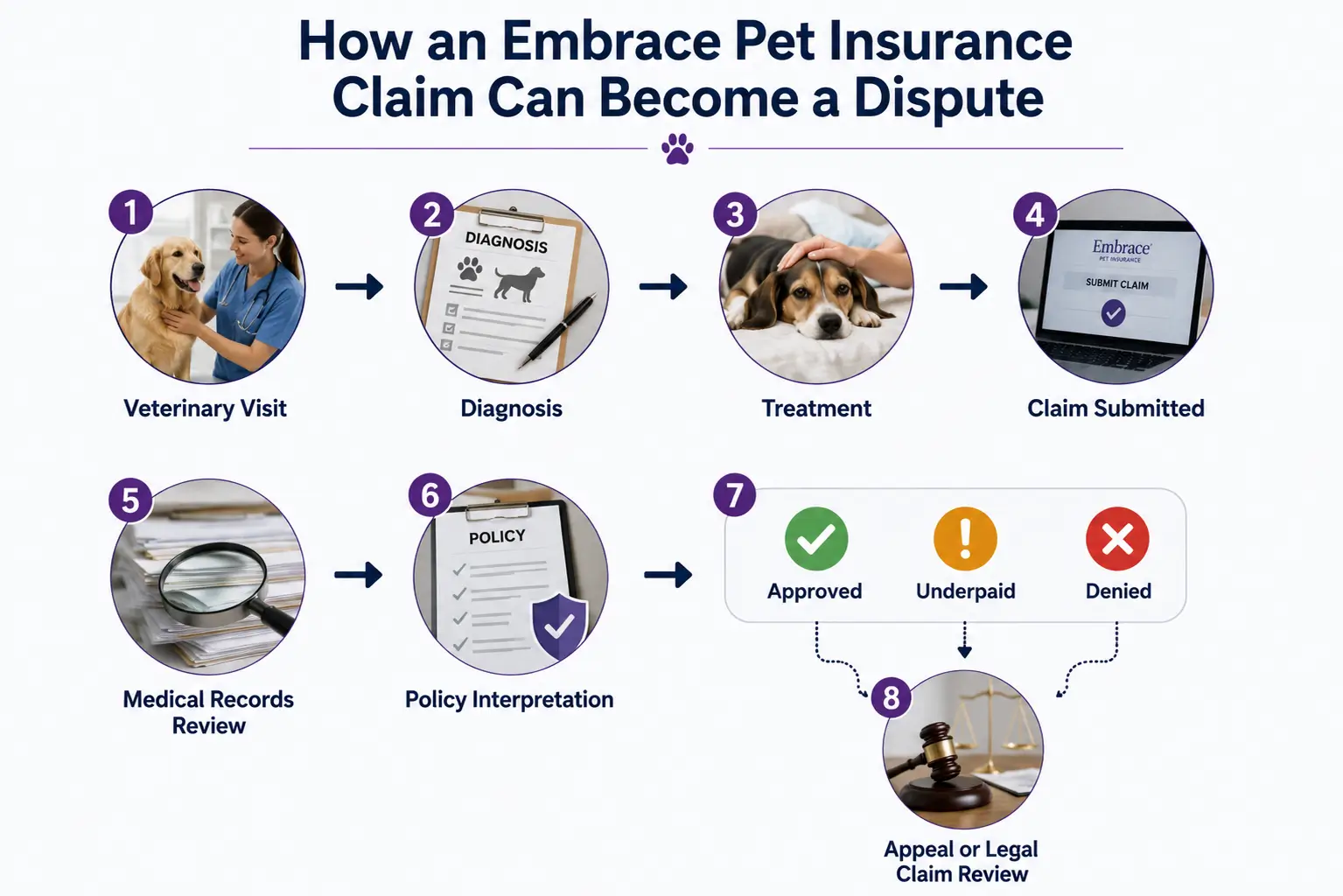
A typical Embrace pet insurance claim starts with a veterinary examination, where your vet documents the diagnosis, treatment, and any relevant notes about your pet’s condition.
The veterinary records then travel with your submission to the policy issuer’s review team.
From there, a claims adjuster checks your policy details and compares them against the medical documentation you submitted. This medical history evaluation determines whether the diagnosis falls under a covered condition.
Embrace, like other pet insurance companies in Florida, moves from coverage determination to a final reimbursement decision once the claim review wraps up.
Why some Embrace pet insurance claims become disputes
An Embrace denied claim starts when the insurer interprets your pet’s medical history, previous symptoms, and the language in your policy differently than you expected. A condition that looks clearly covered on paper can still turn into a denied or reduced payout once the reviewer applies their own reading of the timeline.
The next few examples show how this plays out in practice: each one reflects real Embrace claim denial patterns, revealing a set of triggers worth understanding before you file your own claim.
Case one: when previous symptoms lead to a pre-existing condition determination
A dog was diagnosed with cancer well after the policy went into effect. Embrace denied the reimbursement anyway, arguing that earlier, unrelated symptoms pointed to the disease already being present before coverage started.
That argument: any condition connected to symptoms recorded before your coverage began. The dispute here centered entirely on whether those earlier symptoms, documented for a completely different reason, could fairly be tied to a diagnosis that came much later.
A symptom noted in your pet’s chart years before a new diagnosis can resurface during a claim review, even when your vet never connected the two at the time.
Case two: when medical history changes how a claim is evaluated
Months after enrollment, another dog developed a mass that required treatment. Embrace pointed to past medical issues in a completely different part of the body, issues that had already resolved, and classified the new mass as connected to that older history.
A note about an old skin issue, a past limp, or a resolved infection can sit in a chart for years without causing concern. During a claim review, though, an adjuster may read that same note as evidence of a broader pattern rather than a closed chapter.
Here, the final decision hinged on how the insurer could draw a line between two unrelated events separated by months, sometimes years, of normal health.
Case three: when a new condition is linked to a previous illness
A cat developed an infection after suffering a cut. Embrace classified the claim as pre-existing, pointing to a prior infection in a different part of the body that had been fully treated well before the new injury.
The two infections shared no direct medical connection. The insurer’s review treated location and diagnosis type loosely enough to bundle them together under a single pre-existing label.
A fully resolved condition does not always stay closed in the eyes of a claims reviewer. Anything documented in your pet’s history remains available for interpretation the next time you file, regardless of how much time or treatment separates the two events.
What these Embrace claim scenarios have in common
Three different pets, three different diagnoses, yet the same reviewing logic shows up in every case.
In every scenario, the reviewer drew a relationship between two symptoms that your vet never linked at the time. A timeline that made complete sense to your vet gets reread through the narrower lens of policy language.
That depends heavily on how broadly your animal insurance policy defines a pre-existing condition, and how strictly the reviewer applies that definition to your pet’s chart.
A single sentence from an old visit can carry more weight in these pet insurance claim disputes than the actual diagnosis being treated today. And, none of this guarantees the same outcome for every similar claim.
The result depends on your documentation, your policy’s exact wording, and how the review connects, or fails to connect, the dots between old and new.
Questions pet owners commonly ask about Embrace claims
Can previous symptoms affect my insurance claim?
Yes. If your pet’s chart contains any note resembling the diagnosed condition before your policy began, Embrace can treat it as grounds for denial, even when the note seems minor or unrelated to you.
Why did Embrace only reimburse part of my claim?
It comes down to how the insurer separated eligible expenses from excluded ones. A single invoice can include covered diagnostics alongside an excluded pre-existing treatment, which lowers your total payout without denying the claim outright.
Can I appeal an Embrace pet insurance claim?
Yes. You will generally need additional documentation or a written explanation that challenges the insurer’s original reasoning.
What documents support a claim review?
Exam notes, diagnostic results, treatment timelines, and any prior visit summaries. The more clearly your vet documented when a condition started, the easier it becomes to counter a pre-existing determination.
Can my veterinarian’s records influence the decision?
Absolutely. A brief clarifying letter from your veterinarian explaining how the two conditions differ can change the outcome of a reimbursement decision.
When does an Embrace claim become a legal issue?
A denial by itself does not automatically mean Embrace broke its contract with you. Insurers can interpret ambiguous medical histories, and disagreements over interpretation happen even when everyone acts in good faith.
A closer legal review becomes worthwhile in specific situations, though.
Watch for policy language that reads inconsistently between sections, a covered treatment that was denied outright, reimbursement math that does not add up, or veterinary records that clearly support a different reading than the one Embrace applied.
What to do if your Embrace pet insurance claim is disputed
Consider these steps as you decide how to respond:
- Review your policy and note exactly how it defines a pre-existing condition.
- Gather every piece of veterinary documentation related to the diagnosis, past and present.
- Request the written explanation Embrace used to justify the decision.
- Your veterinarian’s perspective matters here, so discuss the denial with them directly.
- If your policy and the facts support it, file a formal appeal.
- You can Contact Your Pet Attorneys for a legal review of your case.
How Your Pet Attorneys can help
Our team steps in when Embrace claims involve pre-existing condition disputes, reduced reimbursements, outright denials, unclear policy interpretation, or disagreements over what your pet’s medical records actually show.
We review the paperwork the way an adjuster does, then push back when the reasoning doesn’t hold up.
Think Your Embrace Claim Was Reviewed Incorrectly?
Our attorneys can review your policy, veterinary records, and claim decision to help determine whether your dispute deserves a closer legal review.
Common Pet Insurance Claim Challenges and What to Review
| Claim Scenario | Why the Claim Was Challenged | What Pet Owners Should Review |
|---|---|---|
| Cancer diagnosis | Previous symptoms considered related | Medical history timeline |
| New mass or illness | Prior condition interpreted as connected | Veterinary records |
| Infection recurrence | Previous illness linked to current treatment | Policy wording and exclusions |
| Partial reimbursement | Eligible expenses interpreted differently | Reimbursement calculation |
| Claim denial | Coverage interpretation | Written explanation from the insurer |
How an Embrace pet insurance claim can become a dispute
Key Takeaways
- Your claim moves through veterinary records and policy terms before Embrace decides.
- Many disputes come down to how the insurer interprets your pet’s previous symptoms or medical history.
- A denial does not always mean your policy excluded the treatment itself.
- Complete veterinary documentation can significantly influence the outcome of your review.
- Understanding why claims become disputed helps you decide whether to appeal or request legal assistance.
Understanding Your Claim Is the First Step Toward Resolving It
If your Embrace pet insurance claim was denied, partially reimbursed, or challenged because of a pre-existing condition or policy interpretation, Your Pet Attorneys can review your claim, explain your options, and help determine whether your case deserves further legal evaluation.