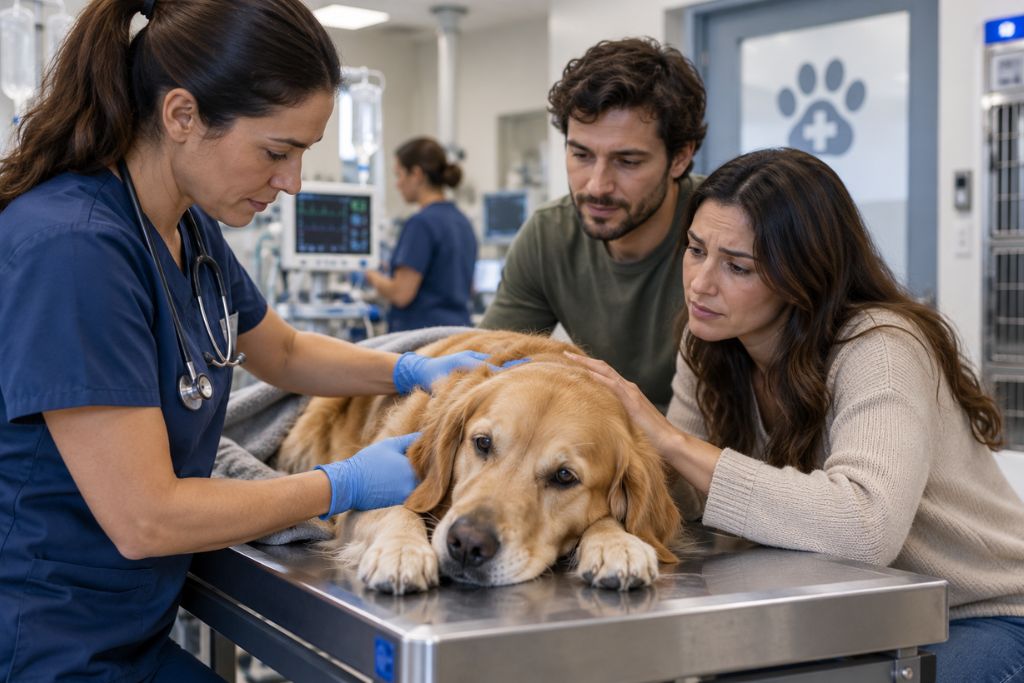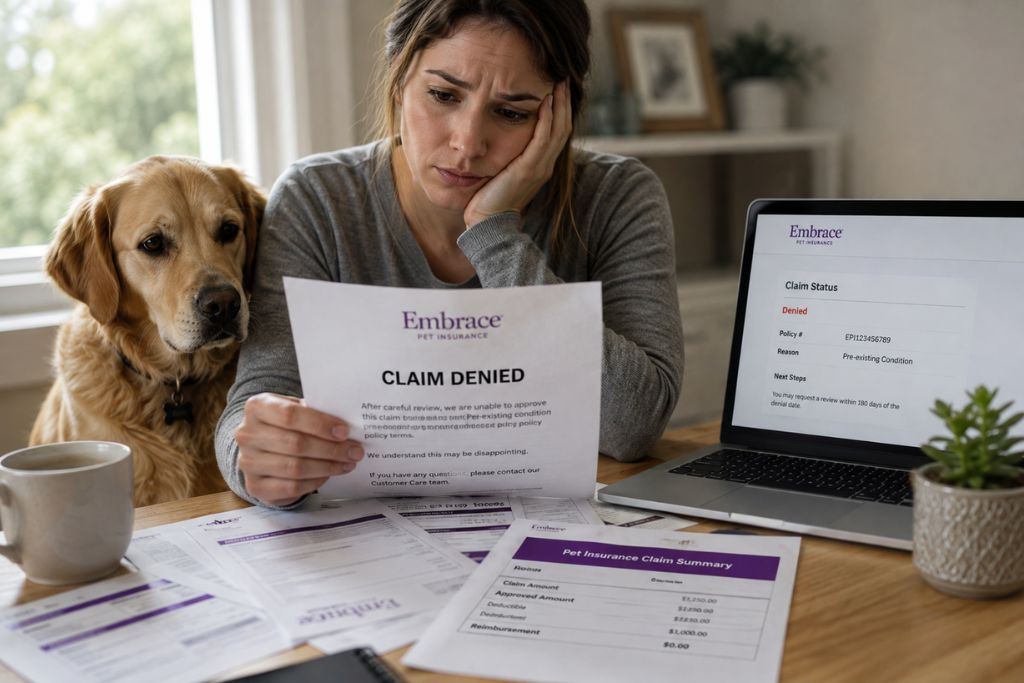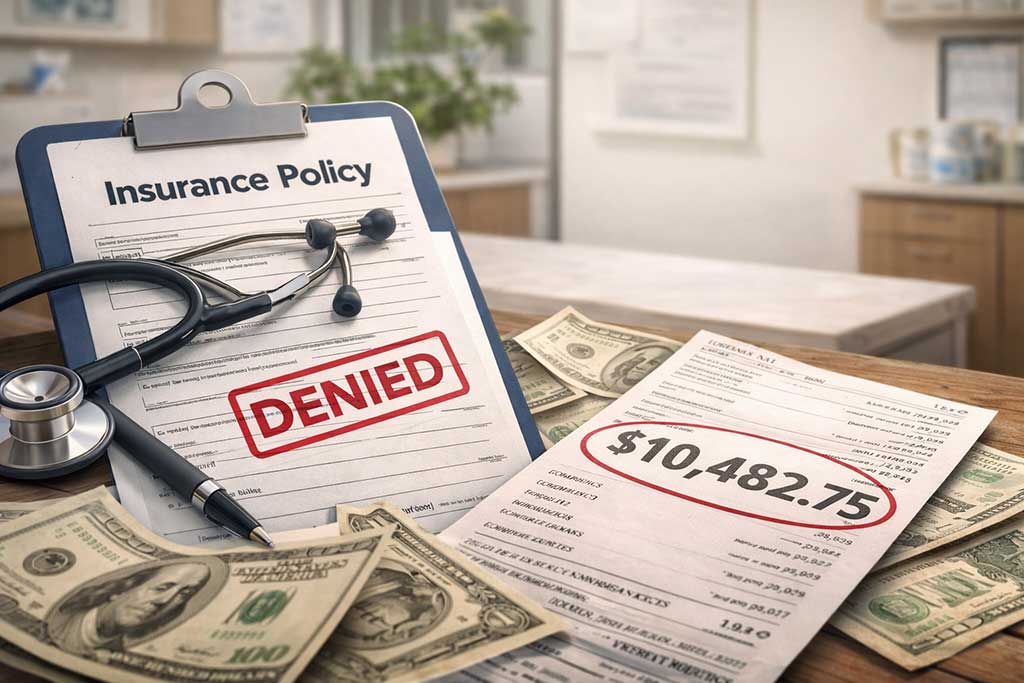
There’s a sense of security having your policy in hand and believing that any major accident or illness will be handled smoothly by your provider. Yet, many pet owners can face unexpected denial notices.
A single error can result in you facing a bill exceeding $10,000 for complex procedures, which is why understanding the underlying reasons for these rejections is essential for your financial safety. For better or worse, animal health insurance requires the same attention as the medical treatment itself to ensure your investment remains protected.
This guide will help you prepare you to safeguard your next filing against these kinds of costly errors. Let’s begin!
Why Pet Insurance Claims Get Denied More Often Than You Think
One might assume that denied claims result from intentional fraud or bad faith actions, but the vast majority actually stem from simple, avoidable mistakes made by either the pet owner or the veterinary clinic.
But, the entire reimbursement process relies on data to verify every medical condition and treatment, ensuring payments align with contract terms and leaving very little room for interpretation. So, a successful pet insurance claim depends on the transparency of the medical history you provide.
The $10,000 Mistake: Poor Documentation
Knowing what qualifies as “poorly documented” can save you thousands of dollars in uncovered expenses. A poorly documented claim often lacks the specific diagnostic codes or clinical observations needed to prove that a condition was not pre-existing before the policy was active.
Also, be aware that ambiguous diagnoses provide the company the means to categorize the visit as elective or non-covered. You can avoid these expensive outcomes by insisting that your veterinarian uses precise terminology and maintains a chronological record that clearly separates new issues from past wellness visits.
Most Common Documentation Errors
Every aspect of pet insurance reimbursement problems start with avoiding the simplest errors in initial submissions:
- Ensure every diagnosis is consistent across all platforms, as conflicting notes between an emergency clinic and your primary veterinarian can lead to a denied claim.
- Detailed invoices should include a breakdown of every single charge, from the specific medications administered to the exact diagnostic tests performed.
- Submitting your paperwork within the specified timeframes is a non-negotiable part of your contract.
- Verification of all dates on your pet’s history confirms that no symptoms were present before your waiting period ended.
Even when you have organized every record and met every deadline, the insurer might still deny your request; in these cases, consulting with experienced pet attorneys in Florida can help you challenge an unjustified rejection.
Visual Guide – The Cost of a Poorly Documented Claim
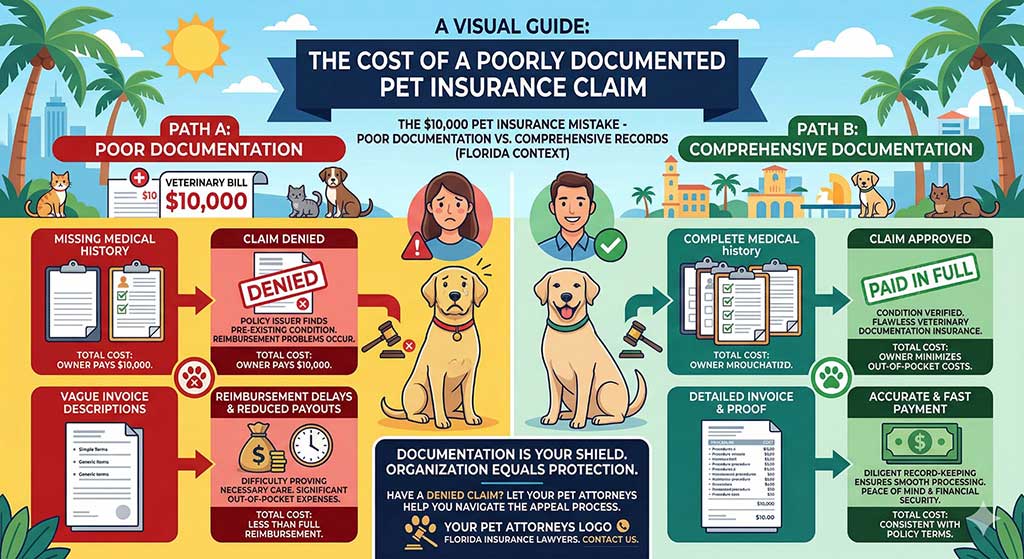
The $10,000 Pet Insurance Mistake
How to Protect Your Claim Before It’s Too Late
Preparation serves as your best defense, always:
- Establishing a centralized record-keeping system allows you to access any piece of medical history instantly.
- Request copies of the veterinarian’s clinical notes at the end of every appointment.
- Confirming your policy limits and exclusions annually helps you understand exactly what the company is obligated to pay.
- Follow the specific submission instructions outlined in your contract, including the use of required forms and portals.
- Monitor your email and account portal for requests for additional information.
What to Do If Your Claim Is Denied
An initial denial is not necessarily the final word regarding your reimbursement eligibility:
- Analyze the denial letter with a focus on specific contract language.
- Gathering supplemental evidence, such as a letter of medical necessity from your veterinarian, can provide the extra weight needed.
- Follow the exact steps for an appeal as outlined in your policy.
- Consult with Florida insurance lawyers who understand the nuances of the industry if the company refuses to engage in a fair review.
- Document every phone call and email during the appeal phase, as these records serve as proof of your efforts to resolve the matter in good faith.
Remain persistent, as many initial rejections are overturned once the policy issuer receives the correct information. By refusing to accept a mistake as a final decision, you ensure your companion receives the full benefit of the health coverage you have maintained for them.
A Small Detail Can Make a Big Difference
Proper management of veterinary documentation and understanding the precise terms of your pet health coverage are key to the difference between a fully reimbursed $10,000 claim and a devastating personal loss.
Reaching out to Your Pet Attorneys ensures your rights are protected and your companion receives the care they deserve, allowing you to focus entirely on supporting their recovery. Commitment to these small details ensures a long and healthy future for the animals who mean the most to you.
Understanding your policy and documentation, and iInvesting time today in learning these details, ensures you are fully prepared for your pet’s future needs, providing the true long-term security you really seek.