You are likely among the many who purchase pet insurance but lack the knowledge required to enforce it effectively, often accepting an insurer’s denial decision as final.
Understanding your legal position could easily be the difference between paying thousands of dollars for essential treatments and ensuring that policy issuers adhere to established state standards.
Florida has recently introduced specific regulations, but these only function if you know how to wield them during the claims process. This guide provides you with the transparency needed to challenge unfair denials and actually protect your wallet. Let’s begin!
Why Pet Insurance Claims Get Complicated
- Exclusions often include genetic conditions or regional concerns that are not immediately apparent, requiring you to ask for a complete list before your final commitment.
- You must actively verify terms, ensuring ambiguous phrases are resolved fairly rather than automatically in the insurer’s favor.
- Specific definitions regarding acute versus chronic conditions are vital for preventing administrative delays, which often result in a rejected application.
- Lack of specific information regarding claim calculation methods makes it difficult to verify if payment amounts align correctly with established local rates.
- Many providers rely on the fact that most owners will not challenge a denial, which is why consulting with pet attorneys in Florida can help to overturn an unfair decision.
10 Pet Insurance Rights You Should Know in Florida
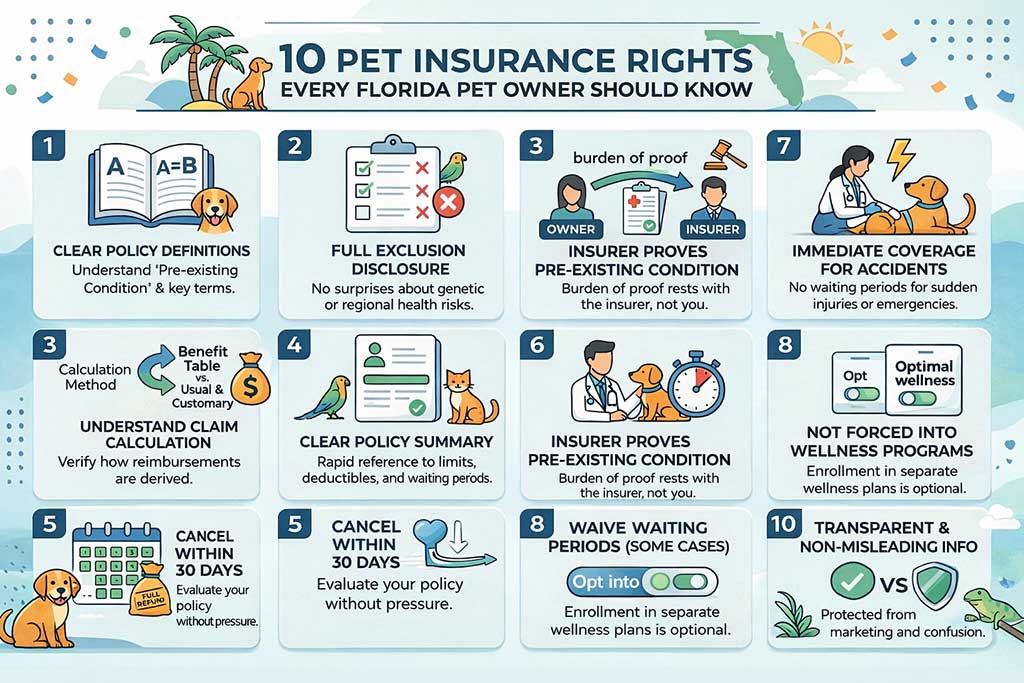
1. The Right to Clear Policy Definitions
HB 655 law now mandates extensive transparency regarding key policy terms, requiring insurers to provide unambiguous explanations for concepts such as chronic conditions and hereditary disorders.
2. The Right to Full Disclosure of Exclusions
Before you sign any commitment, policy issuers must actively provide all documentation detailing applicable exclusions, including specific regional illnesses and breed-specific hereditary issues.
3. The Right to Understand How Claims Are Calculated
You must receive explicit and clear information detailing precisely how every reimbursement is derived, which prevents companies managing the policy from using vague tables to obscure actual benefits.
4. The Right to a Clear Policy Summary
Every provider must give you a concise summary document outlining essential policy components, which prevents confusion and provides you with a rapid reference to critical data points.
5. The Right to Cancel Within 30 Days for a Full Refund
Every state pet parent retains a specific opportunity to thoroughly evaluate their coverage without pressure, possessing a mandatory thirty-day cancellation period for a full refund. Use this time to scrutinize the contract for any mismatch between the marketing materials and the actual legal obligations.
6. The Right to Have the Insurer Prove a Pre-Existing Condition
The company must provide substantial evidence demonstrating that a pre-existing condition actually existed before your waiting period ended.
7. The Right to Immediate Coverage for Accidents
Policies are not permitted to enforce any type of waiting period for injuries. This gives you confidence that acute care is covered immediately after policy inception and prevents expensive surprises.
8. The Right to Waive Waiting Periods in Some Cases
By proving your pet is healthy at the start of the policy, you eliminate their ability to claim a condition was pre-existing later on.
9. The Right Not to Be Forced Into Wellness Programs
You have the freedom to choose how you manage routine care like vaccinations and dental cleanings without it affecting your major medical coverage.
10. The Right to Transparent and Non-Misleading Information
If an advertisement makes a promise that the policy does not keep, you have the right to seek a resolution based on those misleading claims.
What This Means for Pet Owners
Understanding your rights is not just theoretical—it directly impacts how much you pay and how effectively you can respond to a denied claim.
Here’s how to apply these protections in real situations:
Protect Your Coverage From Day One
- Confirm that accident coverage starts immediately to avoid gaps during emergencies.
- Use the 30-day cancellation window to review your policy carefully and request a full refund if it does not meet your expectations.
- Make sure your policy clearly defines key terms like chronic and hereditary conditions.
Build a Strong Claim Record
- Keep detailed reports after every veterinary visit.
- Maintain a complete file with invoices, medical records, and all communications with your insurer.
- Document everything—this is critical if you need to dispute a denial.
Verify How Your Claim Is Calculated
- Ask for a clear explanation of how reimbursements are calculated.
- Compare payouts against local veterinary costs to ensure accuracy.
- Do not accept vague explanations or unclear benefit tables.
Reduce Delays and Disputes
- Consider completing a medical exam early to waive waiting periods when possible.
- Clarify any exclusions before filing a claim to avoid surprises.
- Stay proactive—many denials happen due to incomplete or misunderstood information.
Hold Insurers Accountable
- Insurance companies must follow strict transparency standards under Florida law.
- Misleading information or unclear policy terms can be challenged.
- You are not required to accept a denial without questioning it.
When to Seek Legal Help
If your claim is denied, underpaid, or unclear, taking action early can make a significant difference. Legal guidance helps you:
- Identify inconsistencies in the insurer’s decision
- Strengthen your dispute with proper documentation
- Push for a fair resolution based on your policy terms
If you’re facing issues with your coverage, consulting with a qualified pet insurance attorney can help you move forward with clarity and confidence.